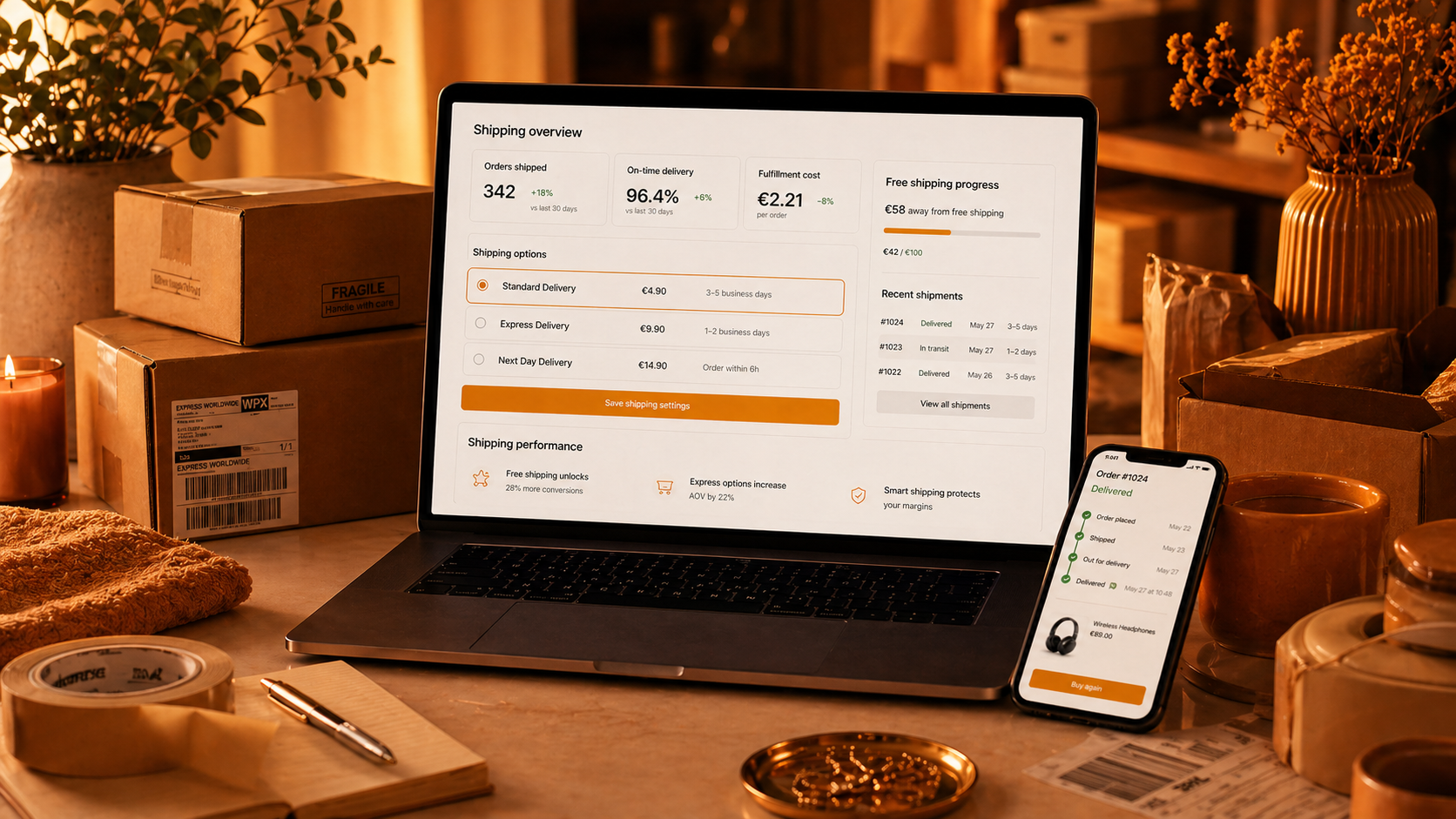

Shipping can make or break an eCommerce order.
A customer may love the product, accept the price, and reach checkout. Then shipping costs appear, delivery feels unclear, and the customer leaves.
A good shipping strategy balances three things: customer expectations, conversion, and margin.
Shipping is not only logistics. It is part of the buying experience.
Shipping Is Part Of The Product Experience
Customers do not separate the product from delivery.
If delivery is slow, expensive, or confusing, the whole brand feels weaker. Even if the product is good, poor delivery communication can reduce trust.
Good shipping communication starts before checkout.
Customers should understand:
• Delivery options
• Estimated delivery time
• Shipping cost
• Free shipping rules
• Return conditions
• Tracking information
The clearer the delivery experience feels, the easier it is for customers to complete the order.
Be Clear About Delivery Times
Vague shipping text creates doubt.
“Fast delivery” sounds nice, but it does not answer the customer’s real question.
A clearer message is:
Delivered in 2–4 business days.
Show delivery details in important places:
• Product pages
• Cart
• Checkout
• Shipping policy page
• Order confirmation email
If delivery depends on location, show an estimate where possible.
Customers trust specific information more than general promises.
Choose The Right Free Shipping Threshold
Free shipping can improve conversion and increase average order value.
But it must be planned carefully.
A good free shipping threshold should be:
• Easy to understand
• Close enough to feel reachable
• High enough to protect margin
• Connected to product weight and shipping cost
• Tested with real order data
Do not choose a random number.
Review your current average order value, shipping costs, margins, and product mix first.
If the threshold is too low, profit can suffer. If it is too high, customers may ignore it.
Use Cart Progress Messages
If you offer free shipping above a certain amount, show progress clearly in the cart.
Example:
You are €18 away from free shipping.
This makes the offer easier to understand and gives the customer a reason to add one more item.
It works even better when you suggest relevant add-on products.
Good add-ons can include:
• Small accessories
• Refills
• Popular low-cost products
• Related items
• Products already often bought together
The customer should not need to search for something random just to reach the threshold.
Offer Simple Shipping Options
Too many shipping options can confuse customers.
Too few options can limit choice.
Most stores need a small set of clear delivery options.
For example:
• Standard delivery
• Express delivery
• Pickup point
• Free shipping over a threshold
The right options depend on your market, products, and customer behavior.
The goal is not to show every possible delivery method. The goal is to make the choice easy.
Protect Your Margin
Shipping is not only a conversion tool. It is also a real cost.
If free shipping is too generous, it can reduce profit even when orders increase.
Track shipping performance carefully.
Important metrics include:
• Average shipping cost per order
• Shipping revenue collected
• Orders using free shipping
• Average order value by shipping method
• Return rate by shipping method
• Margin after shipping
A good shipping strategy should make the total offer feel fair while keeping the business healthy.
Reduce Surprises At Checkout
Customers should not discover important shipping information at the final step.
If a product has a longer delivery time, special handling, location limits, or pickup-only rules, show that earlier.
Surprises reduce trust.
Clear information increases confidence.
Before checkout, customers should already understand:
• How much delivery costs
• When the order may arrive
• Which delivery options are available
• Whether free shipping applies
• What happens after the order is placed
The final checkout step should confirm the decision, not create new doubts.
Prepare For Peak Periods
Shipping problems become more visible during holidays, campaigns, and product launches.
Before peak traffic, check:
• Carrier limits
• Delivery promises
• Warehouse capacity
• Stock availability
• Customer support scripts
• Return policy communication
• Order confirmation emails
It is better to promise realistic delivery than to overpromise and disappoint customers.
A clear delivery promise protects trust, especially when order volume is high.
Magento Shipping Strategy
Magento and Adobe Commerce stores often have advanced shipping rules, multiple carriers, custom delivery logic, and third-party extensions.
This gives flexibility, but it can also create problems if the setup is not clean.
For Magento stores, check:
• Shipping method logic
• Carrier integrations
• Free shipping rules
• Cart price rules
• Delivery estimates
• Checkout shipping step
• Extension conflicts
• Mobile checkout behavior
Shipping should feel simple for the customer, even if the logic behind it is complex.
A clean Magento shipping setup can improve both conversion and operational efficiency.
Final Thought
Shipping strategy is not only about moving products.
It affects conversion, customer trust, average order value, and profit.
When delivery is clear, fair, and easy to understand, customers feel safer completing the order.

Let’s create your success story next.
We are happy to answer any questions you may have in regard to our eCommerce services!