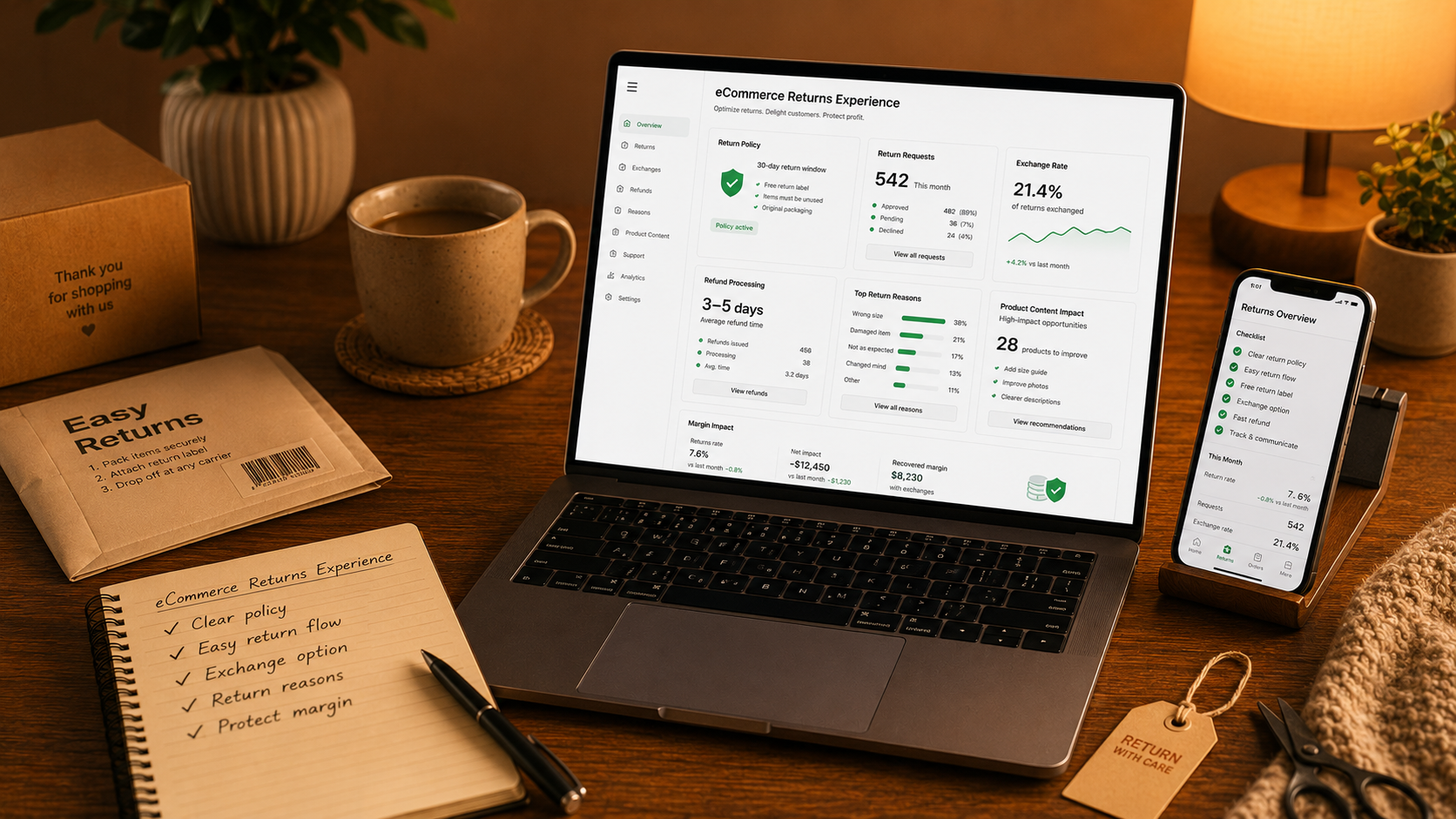

Returns are part of eCommerce.
No store wants too many returns, but every customer wants to know returns are possible if something goes wrong.
A clear returns experience builds trust before purchase and reduces frustration after purchase.
The goal is not to make returns unlimited or careless.
The goal is to make returns clear, fair, and manageable.
Why Returns Experience Matters
Customers often check returns before buying.
This is especially true for products where size, fit, color, compatibility, or personal preference matters.
If the return policy is unclear, customers may hesitate.
If the return process is difficult, customers may not buy again.
A poor returns experience can create:
• More support tickets
• More complaints
• Lower repeat purchase rate
• Lower trust
• More negative reviews
• More payment disputes
• More manual work for the team
Returns affect more than operations.
They affect conversion, retention, and brand trust.
Start With A Clear Return Policy
A return policy should be easy to understand.
Customers should not need to read legal language to know what is possible.
A good return policy explains:
• How many days customers have
• Which products can be returned
• Which products cannot be returned
• Who pays for return shipping
• How refunds are processed
• How long refunds take
• Whether exchanges are available
• What condition products must be in
• How customers start a return
The policy should be visible before checkout.
Do not hide it only in the footer.
Make Returns Easy To Start
The return process should not feel like a punishment.
If customers need to send multiple emails, wait for unclear instructions, or search for order details, the experience becomes frustrating.
A better return flow should be simple.
Customers should know:
• Where to start
• What information is needed
• What happens next
• When they will receive a response
• How to send the item back
• When the refund or exchange will happen
Clear steps reduce support work.
They also make the customer feel respected.
Use Product Content To Reduce Returns
The best return is the one that never needs to happen.
Many returns happen because customers did not understand the product before buying.
Better product content can reduce return risk.
Improve:
• Product photos
• Size guides
• Fit information
• Material details
• Compatibility notes
• Product dimensions
• Color accuracy
• Use cases
• What is included
• Care instructions
For technical products, compatibility information is especially important.
For fashion, size and fit information matter more.
For furniture or home products, dimensions and materials can prevent mistakes.
Make Exchanges Easy
Sometimes a customer does not want a refund.
They want a different size, color, model, or replacement.
If exchanges are difficult, the store may lose revenue that could have been saved.
Good exchange options can help keep the sale.
Useful improvements include:
• Clear exchange instructions
• Easy size change process
• Product availability check
• Fast replacement flow
• Store credit option
• Simple communication
An exchange can be better than a refund for both the customer and the business.
Protect Margin
A good returns experience does not mean ignoring cost.
Returns can hurt margin through shipping costs, handling time, damaged products, fraud, and discount abuse.
Stores should track:
• Return rate by product
• Return reason
• Refund value
• Shipping cost
• Condition of returned items
• Exchange rate
• Repeat customer behavior
• Support time
• Fraud patterns
If one product has a high return rate, the issue may be product content, sizing, quality, expectations, or supplier problems.
Do not only blame the customer.
Find the pattern.
Use Return Reasons Properly
Return reasons are valuable data.
They can show what is broken in the customer journey.
Common return reasons include:
• Wrong size
• Product not as expected
• Damaged item
• Late delivery
• Wrong item sent
• Quality issue
• Changed mind
• Compatibility problem
• Color difference
• Missing parts
This data should not sit unused.
It should help improve product pages, operations, packaging, quality control, and supplier decisions.
Communication Matters
Customers want to know what is happening.
Silence creates anxiety.
A good returns flow should send updates when:
• Return request is received
• Return is approved
• Label or instructions are sent
• Item is received
• Refund is processed
• Exchange is shipped
• Request needs review
Good communication reduces support tickets.
It also protects trust during a sensitive moment.
What Magento Stores Should Check
Magento and Adobe Commerce stores often need custom return workflows, ERP connections, warehouse logic, and customer service processes.
Magento stores should check:
• Return policy visibility
• Order history experience
• Return request flow
• Refund logic
• Exchange process
• Email templates
• ERP or warehouse sync
• Customer support workflow
• Product return reason tracking
• Reporting by product and category
Returns should be connected to the business process, not handled only through manual emails.
Final Thought
Returns are not only a post-purchase problem.
They influence whether customers buy in the first place.
A clear, fair, and simple returns experience can increase trust and reduce hesitation.
When customers understand the process, they feel safer buying.
When the business tracks the reasons, it can reduce avoidable returns.
Good returns experience is not about giving everything away.
It is about building trust while keeping the business healthy.

Let’s create your success story next.
We are happy to answer any questions you may have in regard to our eCommerce services!